
Finding Lockport Residents
Lockport resident research works best when the starting fact controls the route. An address points first to the Niagara County assessment roll and parcel map. A name may lead to an owner entry, a recorded instrument, a court index, a voter-status search, or an older printed directory. Each source answers one narrow question. The property roll can associate an assessment account with a parcel, while a deed identifies parties to a recorded transfer. Neither alone establishes current occupancy.
Begin with the city or town name shown on the underlying record, not only a Lockport mailing address. Then retain the source date and record type with each result. That small habit prevents an older directory listing, a current assessment, and a court party name from being treated as the same kind of evidence.
- Search the address or owner field in Niagara County PROS-GAR and select the correct municipality.
- Compare the situs, SBL, property class, and mailing fields on the assessment result.
- Use the SBL or deed book and page to follow the recorded-document route through the County Clerk.
- For historical presence, check the Local History Room’s dated directories, newspapers, and census microfilm.
- Request a specific existing city or county record when the online route is incomplete.
Note: A shared name or mailing address is a lead that still needs source-by-source confirmation.
Lockport City or Town?
City of Lockport and Town of Lockport are separate custodians. The City Clerk’s genealogy instructions make that division explicit. County land, assessment, court, election, and probate systems serve a broader area, so the municipality control and the actual situs matter. A City Clerk record can depend on where an event occurred, where a license was issued, or city business, rather than where a person later lived.
The separation also affects where to ask for help. City Clerk material is routed through One Locks Plaza. The Town Clerk and the Town’s GIS guidance are separate channels. County Real Property and the County Clerk hold yet other records. Keep the exact jurisdiction label in a research log, especially when following older entries that may use village, town, or county wording.
Lockport Property Search Fields
Niagara County’s free PROS-GAR quick search is the strongest first stop for a current Lockport parcel question. Its public form can search an address, tax map number, owner name, street, and municipality. For an address, enter the number and street and omit the suffix. Street Finder can list the public roads and can be paired with a number. The owner field is entered surname first and can search a current or prior owner.
| PROS-GAR field | Input | Useful Lockport result |
|---|---|---|
| Street Address | Number and street, no suffix | Assessment parcel by situs |
| Tax Map#/SBL | Number from roll or tax bill | Stable parcel identifier |
| Owner Name | Last name, first name | Current or prior assessment owner lead |
| Street Finder | Select a public road | Addresses along that road |
| Municipality | Select City or Town carefully | Jurisdiction control |
The advanced form adds sale, class, value, physical-characteristic, neighborhood, and street filters, but no ZIP field. It is an assessment tool, not a title determination or a list of everyone at a location.
Lockport Resident Records Offices
Three nearby offices create the main current-record trail. Niagara County Real Property directs users to PROS-GAR, GIS, assessment rolls, and local assessors. The County Clerk keeps land, map, judgment, DBA, and other indexed records. The Board of Elections handles local voter information and public-list access channels. Their records overlap in names and addresses, but they do not mean the same thing.
Niagara County Clerk
175 Hawley Street, 1st Floor
Lockport, NY 14095
716-439-7022
Niagara Board of Elections
111 Main Street, Suite 100
Lockport, NY 14094
716-438-4041
Use the custodian named by the record type. A parcel question belongs with Real Property, an instrument copy with the County Clerk, and voter-list access with election officials.
Lockport Deed Record Routes
The County Clerk’s SearchIQS route can link a Lockport name or parcel trail to grantor and grantee entries, document type, recording date, book and page, and sometimes an image. Niagara’s online deed coverage is stated as circa 1941. Images and full searching can require a subscription or login, so a gated screen is not the end of the search.
County public computers, the clerk’s paper and index history, and document requests are the recorded alternatives. A request can be made by email, fax, mail, phone, or in person and should identify parties, recording date, book and page, or instrument number. The clerk’s stated target is up to three business days. That specificity gives staff a record to locate rather than a broad personal research request.
- Parcel
- A defined piece of land represented in the assessment system.
- SBL
- The tax-map identifier used to distinguish a parcel in New York assessment records.
- Grantor / grantee
- The party transferring an interest and the party receiving it in a recorded instrument.
- Index
- A finding tool that identifies a record; it is not automatically the record image itself.
Note: Recording and assessment entries are useful evidence, but neither should be described as a complete title opinion.
Lockport FOIL Record Requests
New York Freedom of Information Law, Public Officers Law Article 6, provides the fallback for existing City of Lockport and Niagara County records that are not posted online. A request should reasonably describe the item sought, such as a dated meeting packet, parcel card, or identified inspection record. Agencies generally grant, deny, or acknowledge a request within five business days and give an approximate response date when acknowledging it.
Inspection is generally free. The statutory baseline for copies up to nine by fourteen inches is twenty-five cents per page, subject to the law’s rules. The Lockport form separately says an appeal goes to the agency head and must explain the denial in writing within seven days of receipt. Records may be withheld for privacy, investigative, statutory, or other listed exemptions, and FOIL does not require a new database or a new research compilation.
Current Lockport Resident Directories
No single current Lockport resident directory covers every household. The useful public sources are purpose-built records with different populations and dates. Use the assessment roll for the assessed owner tied to a parcel, an election channel for voter-status material, and a deed index for parties to a recorded transaction. The absence of a name may reflect the scope of the record rather than a meaningful negative result.
| Current source | What it can show | Custodian | Access route |
|---|---|---|---|
| PROS-GAR assessment record | Owner, mailing address, parcel and assessment fields | County Real Property | Free public portal |
| Recorded land index | Parties, recording details, book/page | County Clerk | IQS, terminal, or request |
| Voter information | Individual registration and polling information | State and county elections offices | Lookup or lawful request channel |
| City civic rosters | Public board and committee roles | City of Lockport | City pages and meeting records |
| Local history repositories | Dated household and community references | Library and local repositories | In person or collection request |
A current record date belongs beside every result. Assessment rolls and election administration change, and a historic directory is evidence for its publication year only.
Lockport Voter Record Limits
The New York voter lookup is an individual-status tool with County, last name, first name, date of birth, and ZIP fields. Its result is best treated as a current administrative check. Niagara County’s voter-information page also supplies maps, polling-place links, and Board contacts. No county-run public street-wide voter-name search was located in the reviewed sources.
Election Law §5-602 provides for public lists in specified formats. A written voter-data request to the state must state an elections purpose under Election Law §3-103(5). Those public-list rules sit beside a confidential-registration process under Election Law §5-508. New York’s Address Confidentiality Program can also place a substitute mailing address in government records. Do not try to reverse-engineer a protected address from a missing result.
Lockport Court Search Results
New York eCourts separates WebCivil Local, WebCivil Supreme, WebCriminal, WebFamily, WebSurrogate, eTrack, and NYSCEF access. WebCivil Local can be searched by party, attorney, judge, party role, court, case type, filing year, status, and future appearance. The result is an index of court information, not a full file or a conclusion about a person.
Check the court, case number, filing year, party role, and status before treating similarly named results as related. When the actual court file is needed, use the court clerk, County Clerk, or the designated court access route. Sealed and protected information may not appear. A case listing does not prove present residence, liability, or any outcome beyond what the authoritative record actually states.
See the New York eCourts access page before choosing the court-specific search.
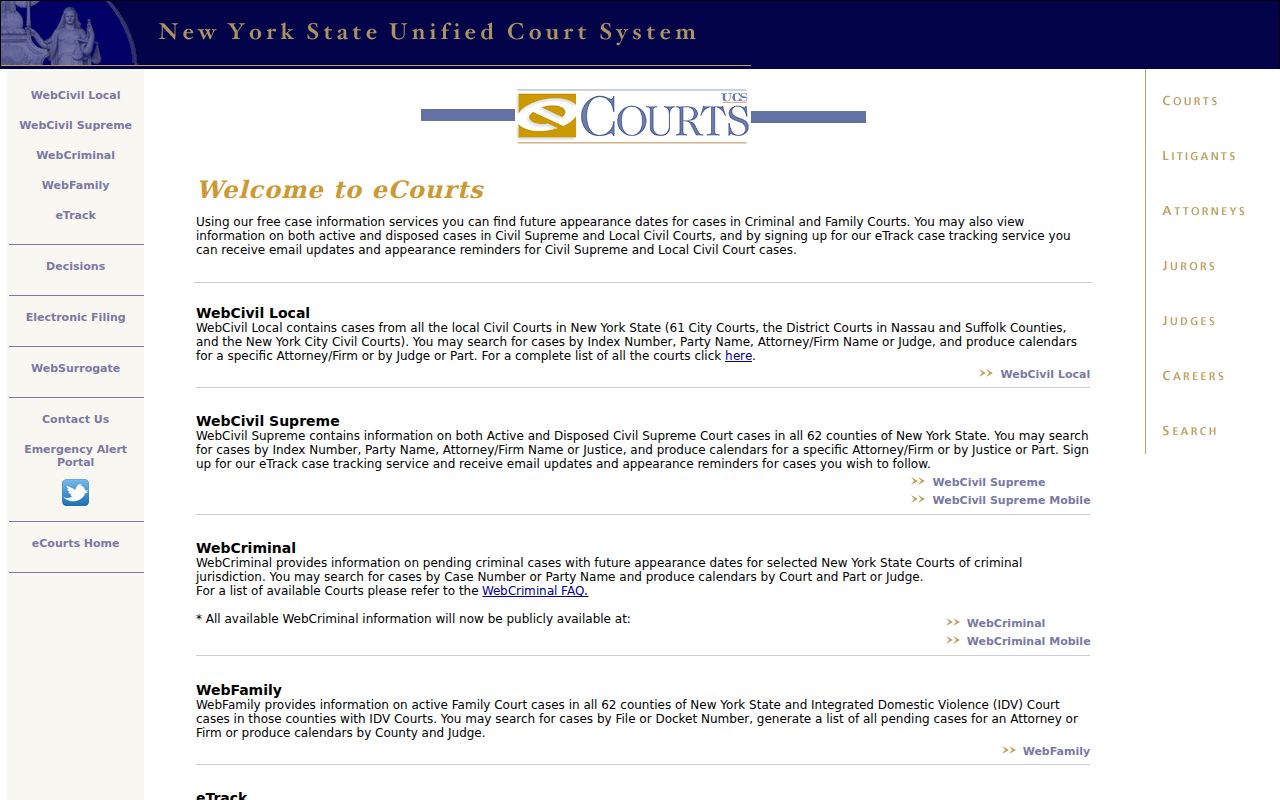
The public landing page helps keep a civil, criminal, family, or estate question in its proper index rather than mixing records with different access rules.
Lockport Custody Record Scope
The Niagara County Sheriff’s incarcerated-person roster is a current-facing custody source, not a general resident roll. A visible row may contain booking information, physical descriptors, charge information, and bail data, but the reviewed source did not establish a historical coverage period, release-date display, or complete export behavior. Current custody and residence are separate facts.
State prison and registry sources have their own statutory limits and search requirements. Use the Sheriff roster only for the fact it reports, preserve the date searched, and avoid republishing unnecessary sensitive detail. A match should never be used as a shortcut around court records, protected information, or identity verification.
The Niagara County Sheriff roster is the official source represented here.
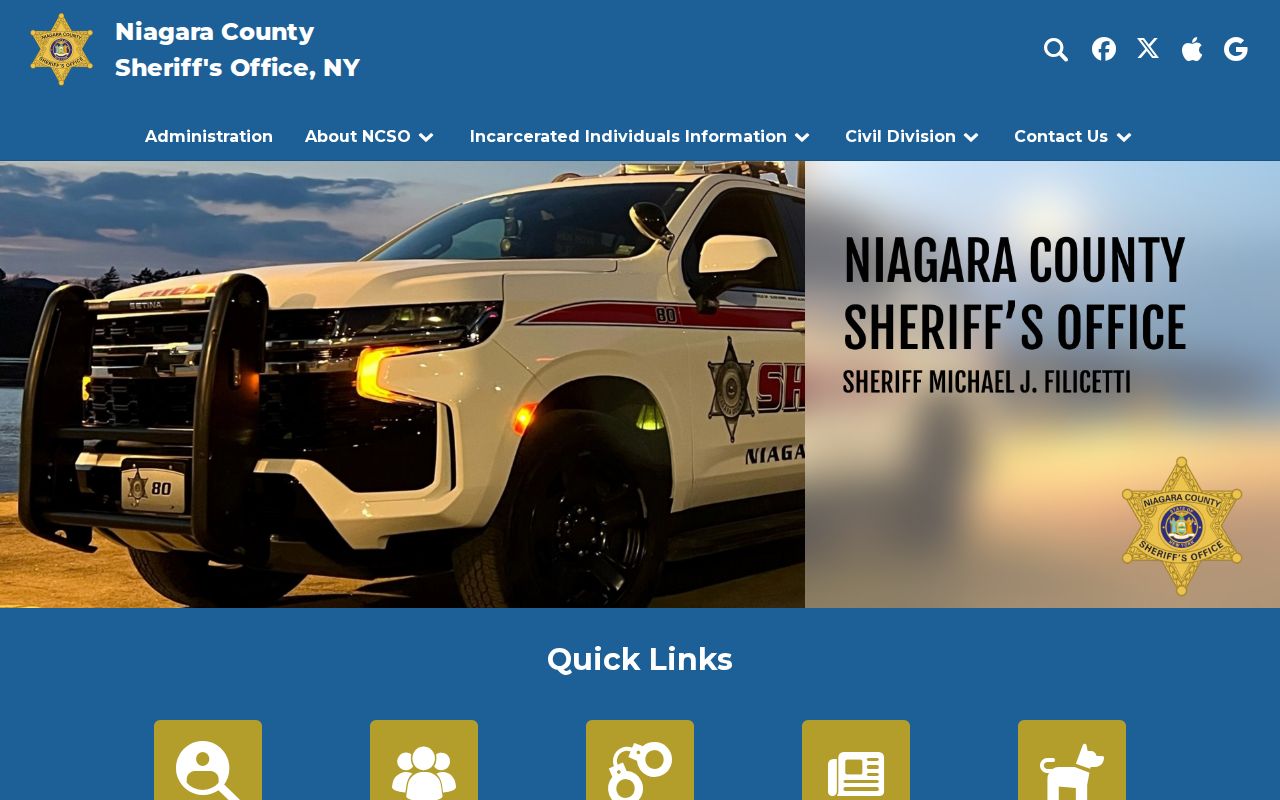
The screenshot illustrates a current roster interface, not a historical database or a way to determine who lives at a Lockport address.
Lockport Library Directory Shelf
The Lockport Public Library Local History Room is the key historical residents-directory resource. Its city directories run from 1856 to the present in print and microfilm. The same room holds local newspapers, federal Niagara County census microfilm from 1820 through 1930 except for the lost 1890 schedule, New York State census microfilm for 1855, 1865, and 1875, yearbooks, an obituary index, and other local material.
For a dated household question, record the directory year, page, spelling, address, and whether the entry is a print or microfilm source. Staff can check standard indexed sources and newspapers for an obituary when given a death date, but the service is not open-ended research. The fuller collection treatment belongs with the Lockport city directories.
Note: Publication dates and newspaper editions matter, because the library identifies gaps and later print-edition changes.
Lockport Archives and Records
When an address or surname reaches beyond a single directory, the State Archives catalog, the Niagara County Historical Society, the Genealogical Society, and the county historian offer different kinds of context. The archival route helps verify a repository or records series. It does not turn a narrative source, photograph, or historical map into proof of a current household.
The County Clerk’s older deed history has a useful bridge: county materials describe 34 bound grantor-grantee index books and 280 deed volumes from 1918 through 1940 converted to electronic form and archival microfilm. That helps explain why an older deed path may move from online IQS coverage to a terminal or staff request.
The New York State Archives provides the catalog and statewide archival gateway.
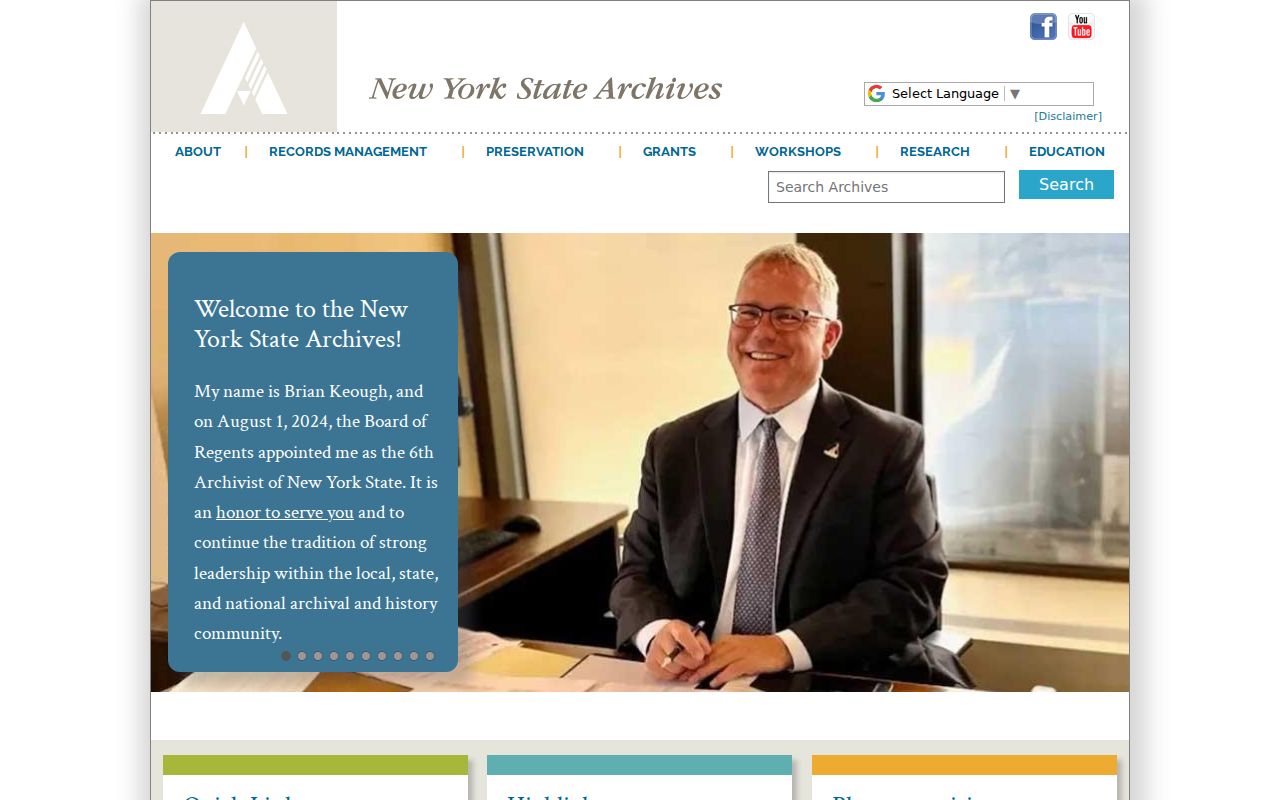
The archive gateway is useful for locating collections and retention context before contacting a county or local repository.
Historic Lockport Resident Directories
Historic Lockport resident directories are dated household snapshots, not a current lookup tool. They are strongest when paired with an address, a newspaper date, a census year, or a deed book and page. A person who appears under a pre-1865 village, town, or county label may still be connected to the place now called the City of Lockport, but the older jurisdiction should remain in the citation.
Historical work also requires patience with gaps. The 1890 federal census is missing, newspaper microfilm is not comprehensively indexed, and no official digitized city-directory run was found in the inspected sources. Print, microfilm, library staff, and nearby historical repositories remain part of the access path.
Lockport Record Dates Matter
A reliable Lockport residents directory search labels each result by its date and custodian. The current assessment roll is an annual snapshot. The County Clerk’s official online coverage depends on the document type. Court indexes, voter administration, and custody rosters change on their own schedules. A city directory confirms an association in its publication year, not years before or after.
Use current official domains when requesting records. Niagara County announced its move to a .gov domain in 2024 and advised users to treat the change as an authenticity signal. Manually open the custodian’s official domain before sharing data or paying a fee. A source date, an exact index or volume, and a jurisdiction label make a later verification possible.
The Lockport City Clerk is the municipal starting point for city-held forms, minutes, and records-access requests.
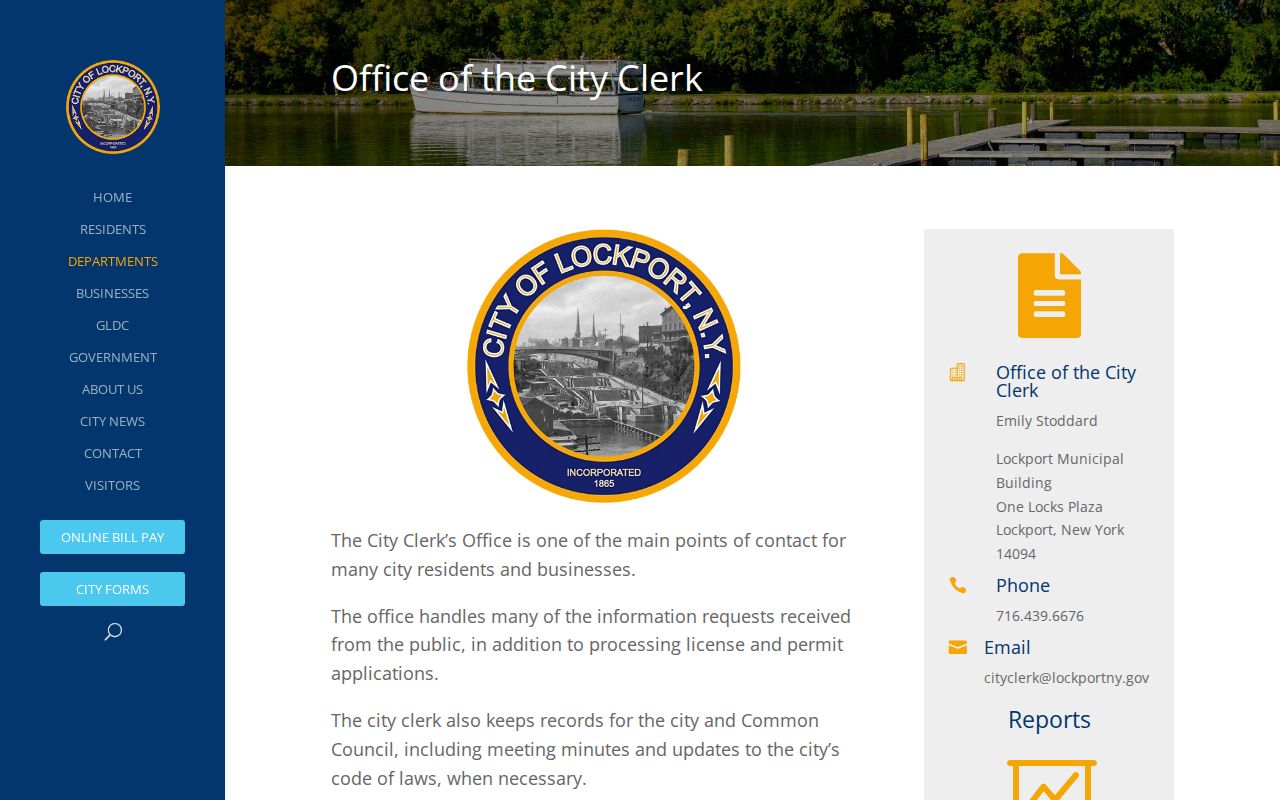
City Clerk access is record-specific, which is why a precise request and the correct City or Town jurisdiction matter.
Lockport Vital Record Access
Vital records answer an event question rather than a general residence question. Lockport City Clerk genealogy material identifies city-held routes, while New York State Department of Health supplies statewide certification and genealogy channels. Birth records are confidential for 75 years unless the person is known deceased; death and marriage records have 50-year genealogy periods with the stated conditions. Certified copies have narrower eligibility.
Use a City Clerk or state form only after matching the event location, record type, relationship requirements, identity documentation, notarization, and payment rules. The local genealogy form and the state route have different custody language, including local records beginning in 1880 and the state’s outside-New York-City registration statement beginning in 1881.
The New York vital-record genealogy guidance explains the statewide route.
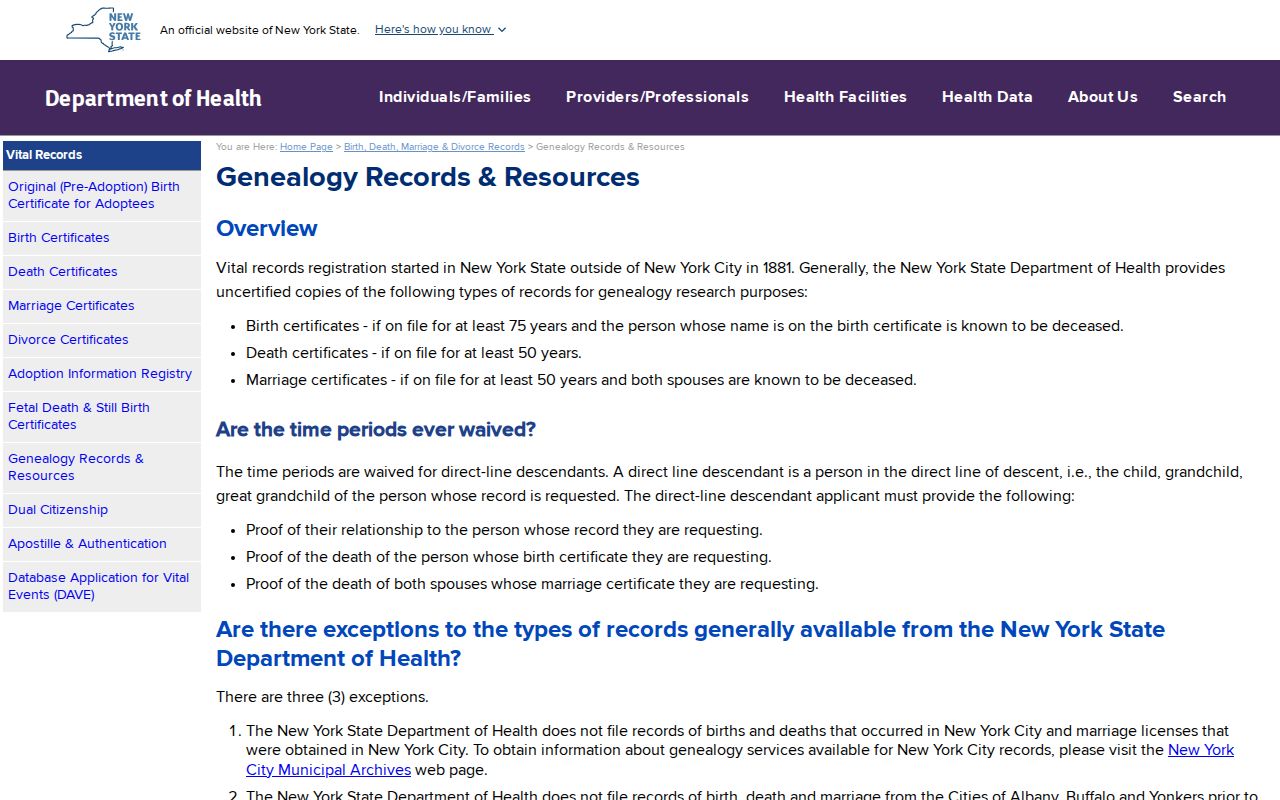
The state guidance helps separate a genealogy request from a request for a certified record.
Lockport County Clerk Access
Land, court, map, DBA, judgment, and document-request services converge at the Niagara County Clerk. Its public records page explains that copies of deeds, mortgages, and maps may be requested by phone, email, mail, or in person. For a specific document, preserve the parties, recording date, book and page, or instrument number before requesting a copy.
That multiple-channel approach is especially important when a subscription screen blocks an image. The public office, request form, and indexed materials offer an official route without guessing at a record’s contents. Call before traveling because access procedures can change.
The Niagara County Clerk land and records page lists the office’s service routes.
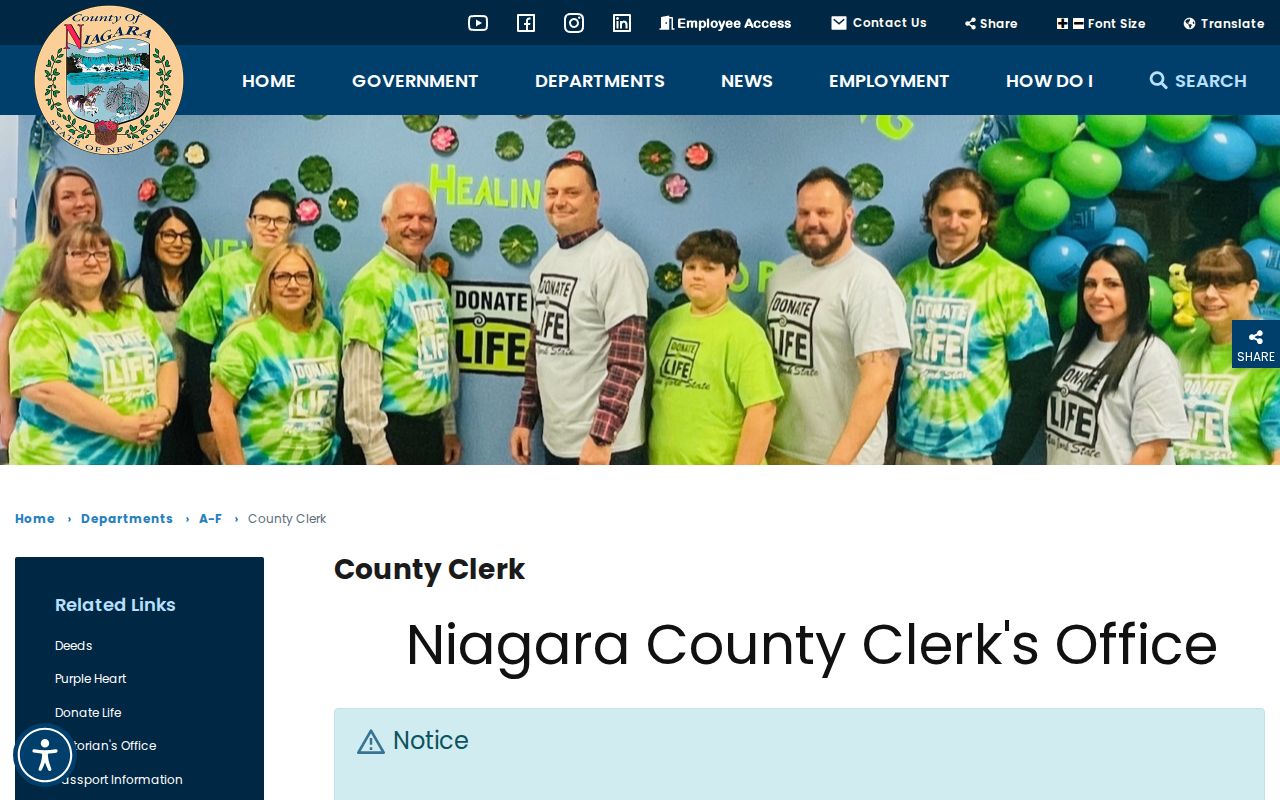
The County Clerk page is the practical fallback for a document whose online image is restricted or unavailable.